
Protocols for rural domestic violence advocate follow-up on police calls.
In many RNEDV rural towns, task forces work with police, town officials and DV agencies to create protocols that allow local advocates to follow-up on police calls with offers of help. A safety protocol is used, and every survivor is free to accept or decline help. Local advocates provide transportation if it is safe and can meet with survivors in the community or at home if it is safe. When this practice started in the southern hilltowns the number of survivors getting help increased ten-fold.
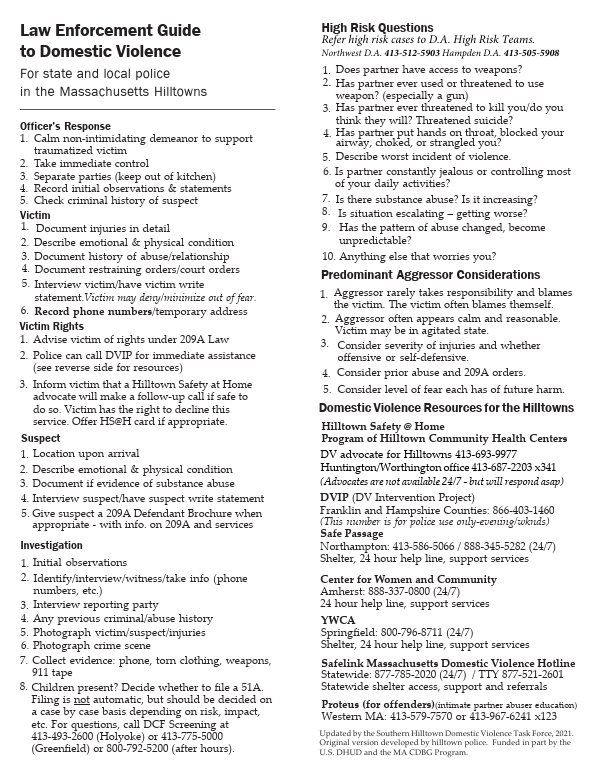
Law Enforcement Guide to DV - Visor Guide for Police Cars
This laminated guide fits behind the visor in a police car and was created by local police, state police and the Southern Hilltown DV Task Force. It includes tips for responding to DV, high risk and predominant aggressor considerations, and local resources. It has been updated and reprinted 3 times, at the request of police.
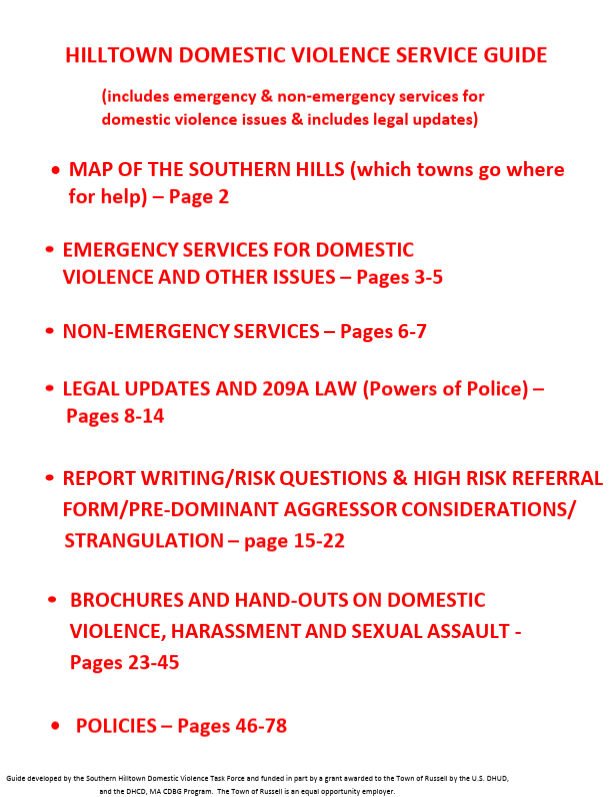
On-line Hilltown Police Domestic Violence Resource Guide
This comprehensive on-line guide was created by the Southern Hilltown DV Task Force at the request of State Police in Russell so state troopers could have access to information on their phone. The guide includes information on emergency and non-emergency services, maps that show which towns go to which courts and hospitals (across two counties), high risk and report writing information, and more.
Police Trainings
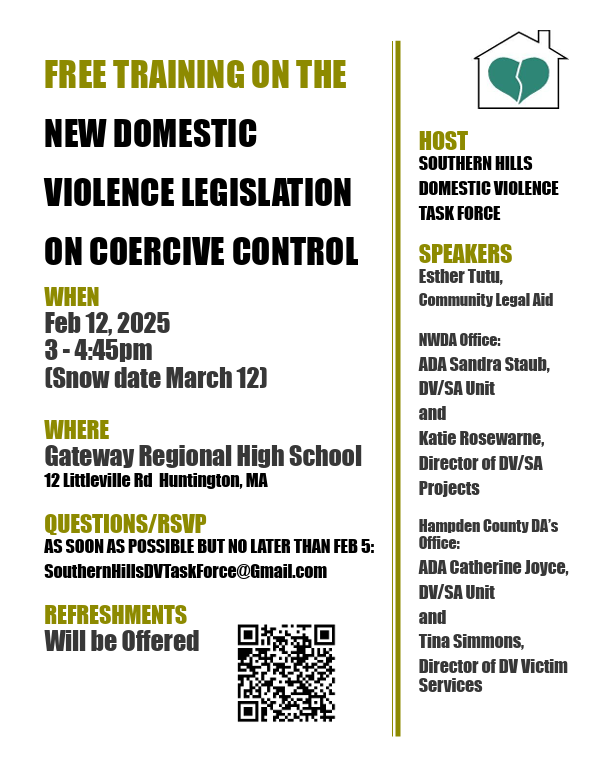
The Town of Ware pays for police to attend bi-annual training provided by the Ware River Valley Domestic Violence Task Force and several other RNEDV Task Forces provide training for police as needed or requested. These in-person trainings respond to current police need and local considerations - and allow for community participation.